Wildlife gardening
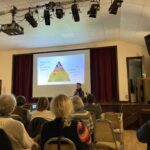
On 25th November ODGC welcomed Nancy Lowe, wildlife gardener and garden designer.

Nancy divides gardens into three types – neat and organised, managed with some wild areas and wild gardens. Three essentials must be provided for wildlife to thrive, a year round supply of food, water and winter shelter. The garden is a cyclical system, everything draws health from the soil and returns to the soil. The soil supports plants which provide food for insects which in turn feed herbivores which support top predators.
An annual mulch should be provided, ideally of garden compost which will be processed by invertebrates. Formal borders can play their part if spring flowers, primroses, pulmonaria and hellebores are planted in the bare areas beneath trees and shrubs and left to naturalise providing nectar for insects. Viburnum bodnantense and mahonia provide shelter and nectar in autumn through winter leaving open areas for summer flowers. Flowers with many florets, phlox and umbellifers for example will provide far more nectar and pollen than single flowers. Short growing plants for insects in lawns include prunella, speedwell, birds’ foot trefoil and white clover, the last two supporting common blue butterflies. Nancy advises planting plugs as seedlings may be overwhelmed by competing plants.
In wilder areas sunlovers include wild carrot, yarrow, ox-eye daisies and knapweed. Long grasses support Meadow brown butterflies, Gatekeepers and Skippers. Wood betony and columbine thrive in shadier areas. Teasels provide flowers for bees, seeds for goldfinches and shelter for hibernating insects.
Winter shelter can be provided by insect hotels, the crevices in trees and shrubs and piles of leaves, stone and wood. Tufty grasses, ferns and stems of veronicastrum, eryngium and poppy provide winter interest as well as shelter.
One of the best ways to attract wildlife is to include a water feature. This provides somewhere for birds to drink and bathe and increases plant diversity by providing a habitat for submerged, emergent and floating plants. These support amphibians and insects such as dragonflies and mayflies.
Ghislaine Arundale