Raised bed vegetable gardening
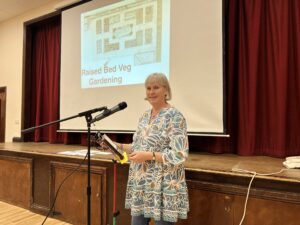
On 31st March ODGC welcomed Marion Stainton, a horticulturist with an interest in sustainable, environmentally friendly gardening. She has been involved in planning domestic, commercial and community projects.
Vegetables have been grown in raised beds since medieval times. In monastery gardens the beds were edged with wattle fences. Victorian bedding schemes were planted on raised beds but it was not until the 1970s that these became fully enclosed. Timber is ideal, modern treatments will not harm plants but railway sleepers should be avoided because of the creosote content.
Marion advocates the no-dig method. Double digging can result in a pan, it damages soil mycorrhiza and brings weed seeds to the surface. Mulching enriches the soil and the organic matter acts as a sponge. A healthy soil begets healthy plants and they have been found to grow better in a firmer soil. The optimum width of a bed is 1.5m to allow access from either side. Pathways should be wide enough to accommodate a wheelbarrow, approximately 0.5m.
Crop rotation is advised to prevent the build up of pests and diseases and a minimum of three beds is required. Potatoes make a good first crop followed perhaps by brassicas and then legumes. Harvesting times should be checked as often a second crop can be grown, salad crops may be grown alongside brassicas for example as they will be ready before the latter have matured. Vigilance is needed to spot pests and diseases. Brassicas can be grown in a cage and salads and carrots do well under fleece draped over wire hoops. Homemade cardboard collars may be used around strawberry plants.
Marion accompanied her informative talk with slides of her enviably well ordered vegetable garden and provided leaflets detailing advice on crop rotation.
Ghislaine Arundale
To access Marion’s leaflets click here:
Acc